Bags Free: Easy Storage. Easier Transport. The Easiest Solution!
Lascia una risposta
Il 29 Giugno, in occasione della festa dei Patroni Ss. Pietro e Paolo, Pro Loco Roma Capitale organizza la VII edizione dell’Infiorata Storica di Roma!
Una manifestazione storica, che riprende i fasti delle antiche feste barocche e riporta a Roma la tradizione delle Infiorate col loro tripudio di colori.
Da sette anni grazie all’impegno di Pro Loco Roma e di maestri infioratori giunti da tutta Italia, rivive nella Capitale una tradizione a lungo dimenticata.
La prima Infiorata Storica venne realizzata in occasione della festa patronale nel lontano 1625, per opera del responsabile della Floreria Vaticana Benedetto Drei e di suo figlio Pietro. Era il pontificato di Papa Urbano VII e piazza San Pietro venne ammantata di “fiori fondati e minuzzati ad emulazione dell’opere del mosaico”, dedicati ai Ss. Pietro e Paolo. Morto Drei, a succedergli fu il grande Gian Lorenzo Bernini, principale artefice delle feste barocche, ed è in questo periodo che “quest’arte floreale da Roma si divulgò”, ai Castelli Romani, poi a Genzano e a Genazzano. La tradizione delle infiorate iniziò così a propagarsi a partire da Roma, ma proprio a Roma andò a scomparire già alla fine del XVII secolo.
Oggi la tradizione rivive nel luogo in cui è nata, restituendo alla città la maternità di un patrimonio culturale da preservare e di un’espressione artistica da tramandare.
(il post completo tratto dal sito di Pro Loco Roma lo potete leggere qui!)

Roma – Infiorata Storica
From Caravaggio to Bernini. Masterpieces of the Italian Seicento from the Spanish Royal Collection; Roma, Scuderie del Quirinale, April 14 – July, 30 2017
Through a remarkable selection of paintings and sculptures, the exhibition ‘From Caravaggio to Bernini. Masterpieces of the Italian Seicento from the Spanish Royal Collection’ reflects the close political links and cultural strategies established by the Spanish court and the Italian states over the course of the 17th century.
Curated by Gonzalo Redín Michaus


Via Giustiniani, Roma, Lazio, Italia
Pasquino or Pasquin (Latin: Pasquillus) is the name used by Romans since the early modern period to describe a battered Hellenistic-style statue dating to the third century BC, which was unearthed in the Parione district of Rome in the fifteenth century. It is located in a piazza of the same name on the southwest corner of the Palazzo Braschi (Museo di Roma); near the site where it was unearthed. The statue is known as the first of the talking statues of Rome, because of the tradition of attaching anonymous criticisms to its base.
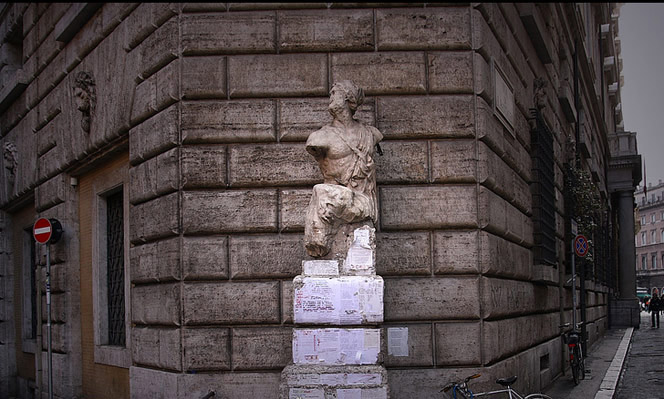
Pasquino, the first “talking statue” of Rome
The statue’s fame dates to the early sixteenth century, when Cardinal Oliviero Carafa draped the marble torso of the statue in a toga and decorated it with Latin epigrams on the occasion of Saint Mark’s Day.

The Cardinal’s actions led to a custom of criticizing the pope or his government by the writing of satirical poems in broad Roman dialect—called “pasquinades” from the Italian “pasquinate”—and attaching them to the statue “Pasquino”.
Thus Pasquino became the first “talking statue” of Rome. He spoke out about the people’s dissatisfaction, denounced injustice, and assaulted misgovernment by members of the Church. From this tradition are derived the English-language terms pasquinade and pasquil, which refer to an anonymous lampoon in verse or prose.*

*testo ripreso da Wikipedia
The “Mouth of Truth” is an ancient mask dated back to the first century, placed inside the church of Santa Maria in Cosmedin since 1632. The mask is a male face, perhaps it is the god Jupiter.

Mouth of Truth
The stone, mentioned already in the eleventh century in the “Mirabilia Urbis Romae” (one of the first guides for pilgrims) has been called with this name since the fiteenth century.
The tradition of the time passed on the belief that the mouth could harm the hands of those who do not say the truth.

Mouth of Truth
Metro B or B1 from Termini Station to the “Circo Massimo” Station.
Walk for about 10 minutes.

Mouth of Truth
Every first Sunday of the month, state-owned heritage places (museums, galleries, archaeological sites, monumental parks and gardens) are open with free admission for all visitors.
Before visiting a museum, please check its opening hours by calling the official infoline.
Free admission does not always include entrance to the exhibitions for which regular fees apply.

Sunday at the Museum
– Colosseum and Roman Forum / Palatine
– Museo nazionale Romano (Palazzo Massimo, Palazzo Altemps, Crypta Balbi, Terme di Diocleziano)
– The Borghese Gallery (booking required)
– Museo nazionale Etrusco di Villa Giulia
– Galleria Nazionale Arte Moderna
– Museo H.C. Andersen
– Museo Boncompagni Ludovisi
– Galleria nazionale d’Arte Antica – Palazzo Barberini
– Galleria nazionale d’Arte Antica – Palazzo Corsini
– Galleria Spada
– Museo nazionale di Palazzo Venezia
– Museo nazionale di Castel Sant’Angelo
– Museo nazionale d’Arte Orientale “G. Tucci”
– Museo nazionale Preistorico Etnografico “L. Pigorini”
– Museo nazionale delle Arti e Tradizioni Popolari
– Museo Nazionale dell’Alto Medioevo
– Museo nazionale degli Strumenti Musicali
– Scavi di Ostia Antica
– Museo Ostiense
– Castello di Giulio II
– Baths of Caracalla
– Mausoleo di Cecilia Metella
– Villa dei Quintili
– Santa Maria Nova
– Hadrian’s Villa in Tivoli
– Villa d’Este in Tivoli
(Original article: http://www.turismoroma.it/itinerari-a-tema/caravaggio?lang=en)
Our itinerary shall take us through the streets of the old city centre of Rome on a journey of discovery dedicated to the masterpieces of a great artist – Michelangelo Merisi, also known as Caravaggio.
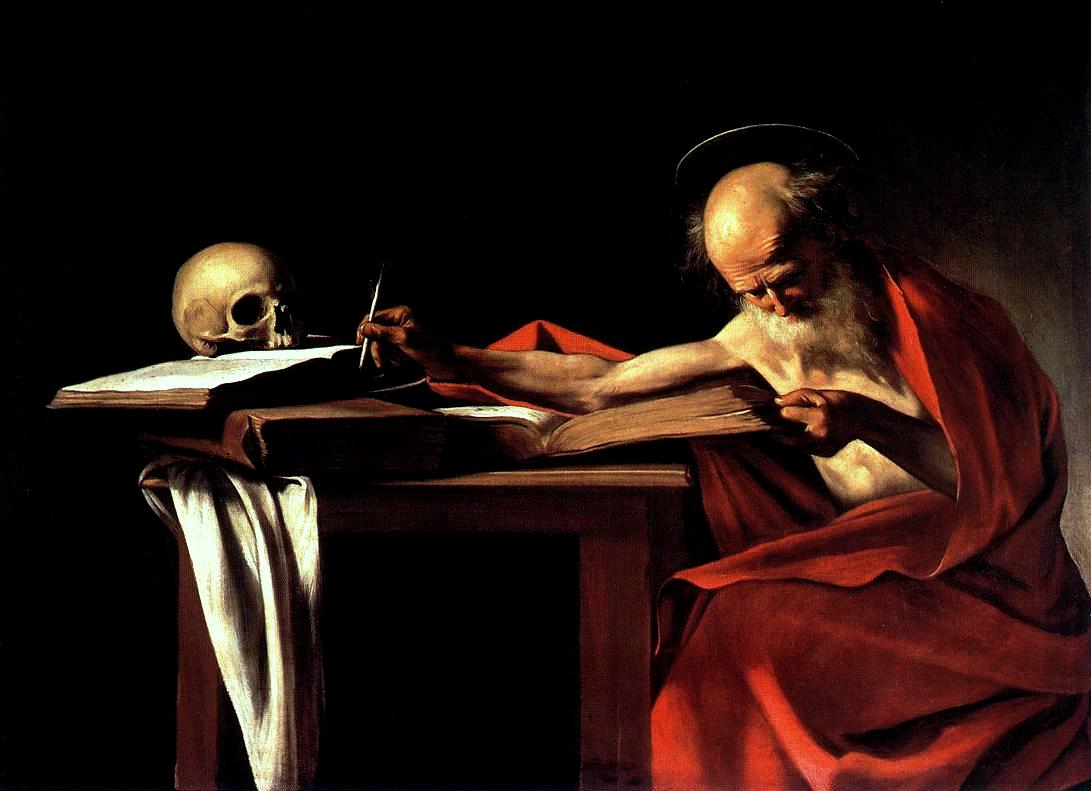
The itinerary starts at the Galleria Borghese which boasts the world’s largest collection of Caravaggio’s works. Here, visitors can admire as many as six canvases by this artist (a man renowned for his stormy life). The canvases are the Boy with a Basket of Fruit (1593-1594), the Young Sick Bacchus (1593-1594 ) – works from Caravaggio’s youth, belonging to the sequestered collection of the Cavalier d’Arpino –, the Madonna and Child with St Anne (dei Palafrenieri) (1605-1606) – commissioned by the Arch-confraternity of the Papal Grooms for their altar at St Peter’s (the commissioners rejected the work, which was then acquired by the nephew of Paul V Borghese) –, David with the Head of Goliath (1605-1606) – painted during the artist’s second stay in Naples, probably in order to curry favour with Cardinal Scipione Borghese in the hopes of a return to Rome –, Saint Jerome Writing (1605–1606) – painted specifically for Cardinal Scipione Borghese in gratitude (since the cardinal had aided him following troubles with the law) –, and, lastly, the Portrait of Pope Paul Paolo V (1605-1606).
Caravaggio – Giuditta taglia la testa ad Oloferne – Palazzo Barberini, Roma
Our itinerary then takes us to the Casino Ludovisi and the chamber hosting the alchemical laboratory. In the small vault, Caravaggio painted in oils on the walls the deities, Jupiter, Neptune and Pluto, the children of Chronos, lord of the Universe.
Let us now move on to the Galleria Nazionale d’Arte Antica, Palazzo Barberini. Here, we find the Judith Beheading Holofernes, which may be identified with the Judith portrayed by Caravaggio for the banker, Ottaviano Costa, and the Narcissus, which was attributed to Caravaggio despite some opposition (after restoration, the work has been definitively attributed to Caravaggio).
The next stop on our journey is the Galleria Doria Pamphilj. Here, we find the work, The Rest on the Flight into Egypt, which may be seen as a painting which most clearly reflects the period of Caravaggio’s training and formation as an artist. The gallery also hosts a Mary Magdalene.
Caravaggio – San Gerolamo – Galleria Borghese
In the Pinacoteca Capitolina we find The Fortune Teller, painted for Cardinal Del Monte (which may be dated back to 1594) and Saint John the Baptist, a painting the existence of which had been practically overlooked until, to the great surprise of all, it was discovered in the office of the Mayor in 1953. This is probably the painting ordered in 1602 by the nobleman, Ciriaco Mattei, who commissioned it from Caravaggio in view of the name of his eldest son, Giovanni Battista (who inherited the canvas).
A work by Caravaggio painted between 1602 and 1604 – The Entombment of Christ – is also to be found at the majestic Musei Vaticani.
Caravaggio, Via Giustiniani, Roma – photo Antunes
Our itinerary also includes churches. Our first visit is to the Church of San Luigi dei Francesi. Between 1599 and 1600, Caravaggio painted the works of the Contarelli chapel, The Calling of Saint Matthew and The Martyrdom of Saint Matthew. Here, we note Caravaggio’s original approach to an artistic trend of the period of the Counter-Reformation, namely the practice of commemorating Martyr Saints, popular at that time.
In the Church of San Luigi dei Francesi we also find the second version of the altarpiece, The Inspiration of Saint Matthew. The first version had been rejected as unsatisfactory.
Our itinerary then leads us from San Luigi dei Francesi to the Church of Sant’Agostino. Here, on the altar of the first chapel to the left (the chapel of the House of Cavalletti), we find the Madonna of Loreto.
Our journey around the churches of Rome which boast works by Caravaggio takes us at last to yet another ‘unmissable’ location – the Church of Santa Maria del Popolo. To the left of the main altar is the chapel known as the cappella Cerasi. Next to the central altarpiece (by Annibale Carracci), we find two celebrated works by Caravaggio, The Conversion on the Way to Damascus and The Crucifixion of Saint Peter.
Vista la reciproca soddisfazione per gli esiti dell’accordo stretto quasi due anni fa, anche quest’anno la Bon Bags S.r.l., titolare del marchio Bags Free, ha rinnovato l’accordo con l’Opera Romana Pellegrinaggi, estendendo la collaborazione già in corso anche ai servizi da rendere ai pellegrini che percorrono la Via Francigena.
Ricordiamo infatti che il cosiddetto Testimonium, ossia l’attestato di aver completato il pellegrinaggio giungendo fino alla Tomba dell’Apostolo Pietro, si può avere esclusivamente tramite l’Opera.

Sono quindi nuovamente disponibili, presso il nostro deposito di Via del Castro Pretorio 32, i biglietti Daily del servizio Open Bus di Roma Cristiana; sempre lì trovate disponibile per la consultazione il catalogo dei programmi 2017 dell’Opera Romana.

Su richiesta è possibile avere tramite noi di Bags Free l’accesso alle Udienze Papali, a titolo gratuito, previa nostra verifica della effettiva disponibilità. I biglietti in questo caso si ritireranno presso gli uffici dell’Opera Romana in Piazza Pio XII (di fronte all’ingresso della Basilica Vaticana).
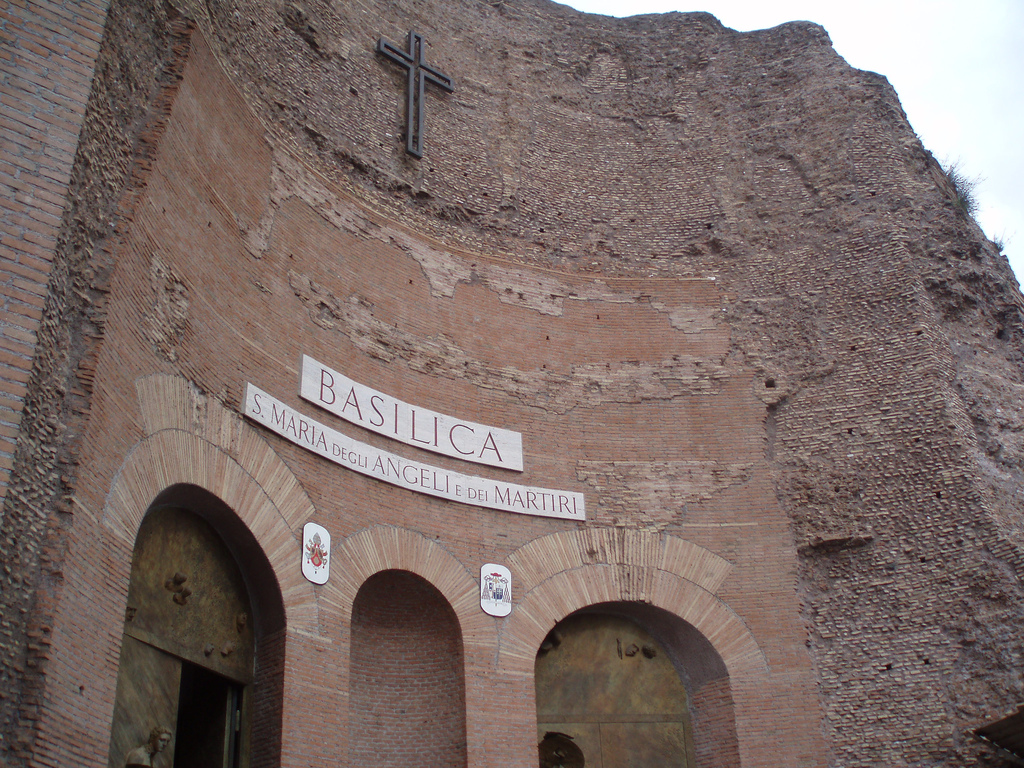
Dici o cerchi su Google “Michelangelo a Roma” e ti vengono in mente o sullo schermo le sue opere più famose. La Cappella Sistina, la Pietà Vaticana, il Cristo alla Minerva, il Mosè e San Pietro in Vincoli… pochi pensano ad una bella basilica a due passi dalla Stazione Termini e dal deposito di Bags Free a Castro Pretorio: la Basilica di Santa Maria degli Angeli.

Certo, la Basilica come la si vede oggi non è esattamente come Michelangelo la progettò, nel Settecento il Vanvitelli e l’Orlandi modificarono parecchie cose, ma vale lo stesso davvero la visita, meglio ancora se guidati da chi la conosce bene e ve la sa ben presentare. A mezzogiorno di oggi per esempio c’è una visita guidata organizzata dall’associazione Esperide.

Se avete tempo fateci un pensierino.
E, ovviamente, se avete borse, zaini o bagagli, pensate a noi!

Preoccupati dopo aver letto il titolo? Non temete, non ce n’è motivo, ci vuole ben altro per togliere di mezzo il simbolo piò conosciuto, assieme al Cupolone, della nostra città, la Caput Mundi.
Sono gli ultimi giorni per poter usufruire della possibilità di prenotare una visita agli ipogei, ai sotterranei, al cosiddetto terzordine del monumento (l’ultimo giorno sarà il 31 gennaio 2017).

Foto di proprietà del sito CoopCulture.It
Riprendiamo dal sito dell’iniziativa:
Visite guidate agli ipogei del Colosseo che consentono di scendere nel ventre del monumento antico più famoso e visitato al mondo.
I racconti sui giochi gladiatori, munera et venationes, diventeranno più vividi nell’immaginario dei visitatori perché ascoltati lì dove si svolgevano gli ultimi preparativi prima che le belve feroci, le scenografie e gli stessi gladiatori salissero sul piano dell’arena per scatenare l’entusiasmo del pubblico con spettacoli dai mille colori.
Questi spazi si conservano nelle condizioni in cui erano alla fine del V secolo d.C., quando furono interrati. Da allora non hanno subito alcuna manomissione dovuta a usi successivi, come avvenuto per la parte elevata dell’Anfiteatro.
Il percorso di visita continua, poi, in varie tappe all’interno del monumento
La visita guidata è prevista per individui singoli, gruppi, comitive, studenti; ed è offerta in lingua inglese, spagnola ed italiana. Insomma, se ve la fate scappare, avete davvero poche scusanti….
Di sicuro non potete dire che non sapevate dove lasciare i bagagli!!!
Il deposito bagagli di Bags Free è a 10 minuti di autobus, due fermate di metropolitana, trenta minuti a piedi! E basta chiedere e ve li veniamo pure a prendere!
Collegatevi a questo link per prenotare la visita, solo altri 7 giorni disponibili!
Poi chiamate lo 064455792 per informazioni sul servizio bagagli!